
Do You Need an Interior Designer, or Just a Second Opinion?
Most renovation projects don't start with a design problem. They start with a decision problem. You're trying to work out what to do next, which option to choose, or whether the path you're heading down is actually the right one.
Mentorship exists for people who are already leading their own project but would benefit from expert guidance when they hit a sticking point. Rather than handing over the design of your home, you're bringing specific questions, challenges and decisions to the table, and getting professional input on how best to move forward.
Often, those challenges aren't small decisions at all.
You might have spent months collecting inspiration, even bought a few pieces of furniture you like, only to find yourself staring at a Pinterest board with 200 saved images and no clear understanding of what to do next. You might be selecting furniture for several rooms at once and trying to work out how different wood tones, fabrics and finishes can sit alongside one another without the scheme feeling disjointed.
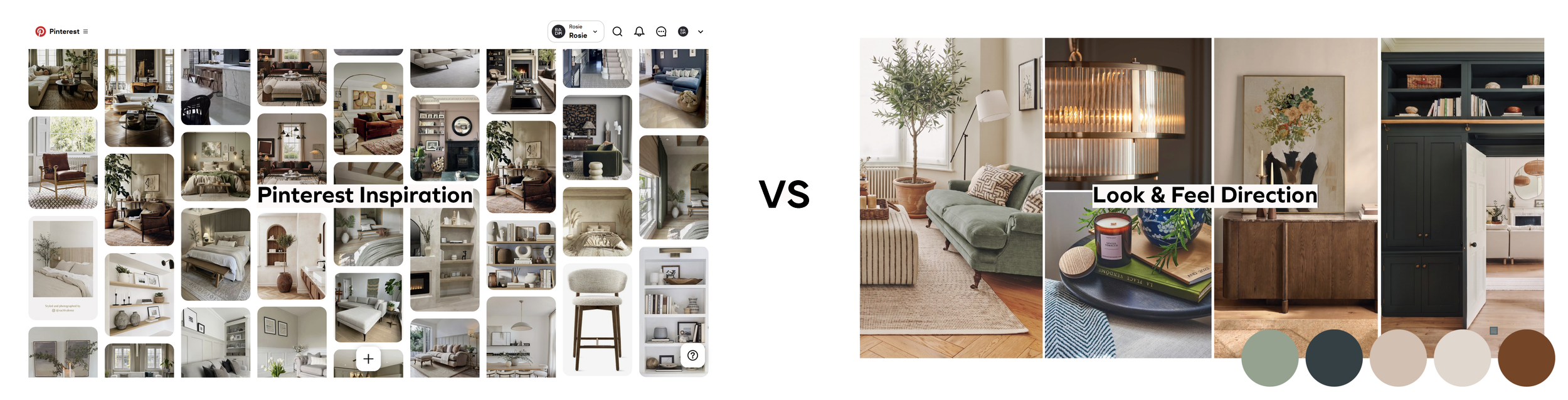
TYPICAL CLIENT PINTEREST BOARD OVERWHELM VS A CLEAR DIRECTION, DESIGNED BY ROSIE
Sometimes the questions are more technical. Is the room layout you've settled on actually the best use of the space? Will the bespoke storage wall your carpenter has sketched out achieve what you're hoping for? Are there opportunities you've overlooked before committing to a costly decision?
These are often the moments where a project either loses momentum or gets rushed and results in regret. Not because there's a lack of ideas, but because there's no clear next step.
Where things start to shift towards interior design is when the project needs more than guidance.
A builder can't build from a conversation. They need information they can follow. And the more detailed the information given, the more likely it is that the finished result reflects the original vision.
If you're renovating a kitchen or bathroom, for example, a tile layout can have a significant impact on the final outcome. Where cuts fall, how patterns align and how cut edges are finished are decisions that benefit from being resolved before work starts. That's where drawings and documentation become essential.
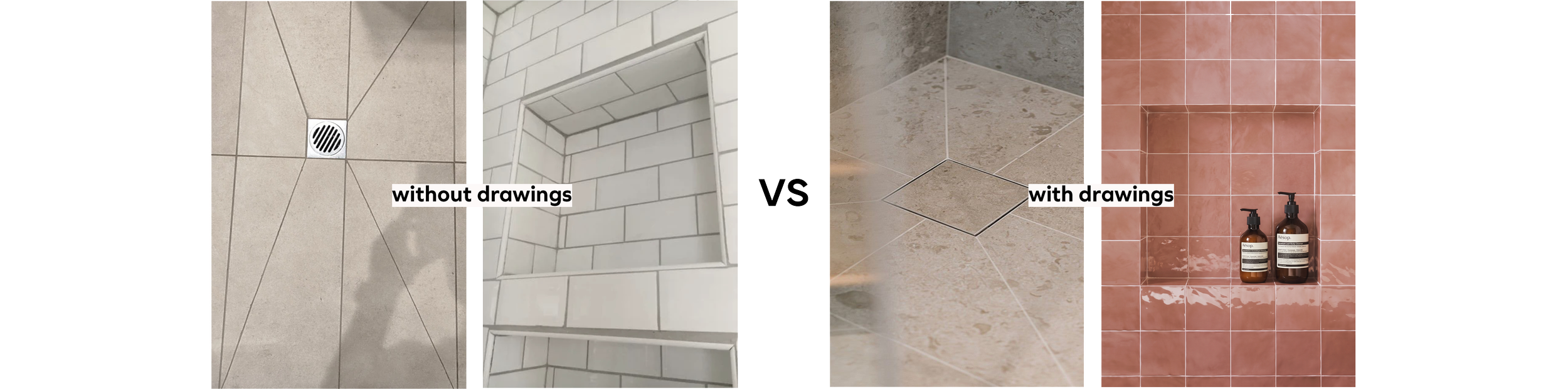
The same tends to apply when a project becomes more complex and interconnected. Perhaps you're renovating multiple rooms at once, reconfiguring layouts, designing bespoke joinery or making decisions that affect the entire flow of a home. At that point, the challenge is often no longer making individual decisions. It's developing and coordinating all of those decisions into a complete design that can be communicated and implemented well.
Another common sign that design may be the better fit is when the project starts to feel like a part-time job.
Some people genuinely enjoy researching, sourcing and managing every detail of a project. Others realise they'd rather not spend evenings comparing finishes, answering builders' questions or trying to work out whether one decision will have a knock-on effect somewhere else.
Neither approach is right or wrong. They're simply different ways of approaching a project.
The simplest distinction is this:
If you're largely leading the project yourself and occasionally need expert guidance to navigate important decisions, mentorship can be incredibly valuable.
If the project requires detailed planning, technical drawings, or someone to develop and coordinate the countless decisions that sit behind a successful renovation, that's usually where interior design becomes necessary.
Neither service replaces the other. They simply solve different problems.
And for many projects, understanding which problem you're trying to solve is the most useful place to start.